 Reviews



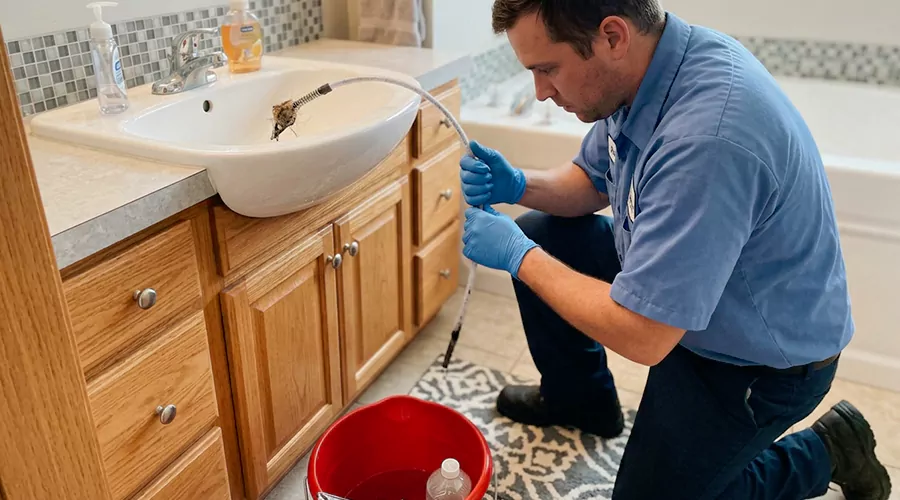
A bathroom sink drain should be cleaned when hair or grooming residue begins collecting around the stopper, before drainage becomes fully blocked. Routine DIY cleaning can cost less than $25 in 2026, while professional drain cleaning costs $147 to $352 with an average near $246. Bathroom plumbing can also address recurring sink drainage problems, clogged pipes, and other plumbing issues throughout the bathroom.
The supplied keyword clean bathroom sink drain is preventive rather than emergency intent.
A clean drain should move water quickly and stay free of strong odor.
What Builds Up in a Bathroom Sink Drain?
Bathroom sink drains collect hair and soap residue from everyday grooming. Toothpaste can add sticky material. Shaving products can leave film around the stopper. This buildup often starts close to the surface before moving into the P-trap.
- The pop-up stopper catches much of the material.
- The upper drain wall collects residue.
- Hair can then move into the P-trap.
- Biofilm can create unpleasant odor.
The supplied keyword stinky sink drain describes one symptom that often appears before severe blockage.
Routine cleaning removes the material before a mechanical clog develops.
How Often Should You Clean the Drain?
A bathroom sink drain benefits from light cleaning every few weeks when the sink gets daily use. The stopper may need more frequent hair removal. A deeper cleaning is appropriate when drainage begins slowing or odor develops.
- There is no single schedule for every household.
- A sink used by several people collects hair faster.
- Daily shaving can increase residue.
- Hard-water deposits can also make the drain rougher.
- Use performance as your guide.
Clean the drain before water begins pooling in the basin.
How Does a Dirty Drain Turn Into a Clog?
A dirty bathroom drain becomes clogged as new debris sticks to material already inside the pipe. Hair provides a structure that soap residue can coat. The opening gradually becomes smaller until normal faucet flow causes water to collect in the sink.
| Drain Condition | What You Notice | Needed Action | 2026 Cost Exposure |
|---|---|---|---|
| Clean | Fast drainage | Light maintenance | Minimal |
| Dirty | Odor or visible residue | Clean stopper | Under $25 DIY |
| Restricted | Slow water | Mechanical cleaning | DIY possible |
| Clogged | Standing water | Deeper clearing | $147 to $352 |
Professional drain cleaning averages about $246 in 2026.
Cleaning early is simpler because the debris is still close to the opening.
What Signs Mean the Bathroom Drain Needs Cleaning?
A dirty drain can create symptoms before the sink becomes fully clogged. Odor is one common sign. A sticky stopper is another. Slower drainage should be treated as a warning rather than normal sink behavior.
- Hair is visible around the stopper.
- The drain smells unpleasant.
- Water drains more slowly.
- Black residue appears on the stopper.
- The drain gurgles lightly.
- Toothpaste residue collects around the opening.
- The stopper begins sticking.
- Water leaves a ring around the drain.
- Drain flies appear near the sink.
- The sink needs frequent plunging.
A strong odor combined with a dry P-trap deserves a different diagnosis because the missing water seal can allow sewer gas into the bathroom.
How Do You Clean the Pop-Up Stopper?
The stopper is the most important bathroom sink drain component to clean because hair wraps around its lower section. Removing that hair prevents it from moving farther into the P-trap.
- Lift the stopper if it is removable from above.
- If needed, disconnect the pivot rod beneath the sink.
- Pull out the stopper.
- Remove all hair.
- Wash the stopper with dish soap.
- Use a small brush.
- Clean the drain opening.
- Rinse the stopper.
- Reinstall it after cleaning.
Do not push the removed hair back into the drain.
The trash is the proper destination.
How Do You Clean the Upper Drain?
The first few inches of the drain can collect sticky residue even when no full blockage is present. A narrow brush or flexible drain strip can clean this area.
- Remove the stopper.
- Use a small drain brush.
- Scrub reachable surfaces.
- Pull out loose hair.
- Rinse with hot tap water.
- Repeat if the drain still feels greasy.
Current 2026 cleaning guidance recommends starting with simple physical cleaning before moving to deeper methods.
Avoid scratching decorative drain finishes with sharp metal.
The goal is to remove residue without damaging the fixture.
Can Baking Soda and Vinegar Help Clean the Drain?
Baking soda and vinegar can help with light residue and odor. Current 2026 cleaning guidance includes the method as a low-cost maintenance option. The ingredients cost less than $5 in many cases.
- Remove visible hair first.
- Pour baking soda into the drain.
- Add vinegar.
- Allow the reaction to settle.
- Rinse afterward with hot water.
- Never mix this method with commercial drain opener.
Do not expect it to remove a dense hair mass.
Mechanical extraction is more useful when physical material is visible.
How Do You Clean the P-Trap?
The P-trap does not need routine removal every week. Clean it when odor or slow drainage remains after the stopper area has been cleared.
- Place a bucket underneath.
- Loosen the slip nuts.
- Remove the trap.
- Empty its contents.
- Wash the interior.
- Inspect the washers.
- Reinstall the trap.
- Run water.
- Check for leaks.
The supplied keyword bathroom sink plumbing fits this deeper maintenance step.
A leaking P-trap repair can cost $5 to $100 in DIY materials depending on the failed part.
How Do You Clean a Smelly Sink Drain?
A stinky sink drain can come from hair buildup or a dry P-trap. First determine whether the sink still has water in the trap. Regularly used sinks usually keep that water seal automatically.
- Clean the stopper.
- Remove visible organic residue.
- Flush the drain.
- Run water long enough to refill the trap.
- Wait to see whether the odor returns.
A smell that disappears after cleaning probably came from residue.
Persistent sewer-like odor can point toward a trap or vent problem.
Do not mask recurring sewer odor with fragrance alone.
What Should You Avoid During Drain Cleaning?
Avoid combining household cleaning mixtures with commercial drain chemicals. Chemical reactions can produce dangerous fumes or splashing.
- Never mix bleach with drain opener.
- Do not open the P-trap when unknown chemicals are inside.
- Avoid pouring repeated chemical doses into a slow drain.
- Do not force sharp metal into finished parts.
- Avoid washing removed hair back into the sink.
Current sink-maintenance guidance recommends mechanical methods and lower-risk cleaning steps before harsh chemicals.
Cleaning should reduce buildup without creating a new plumbing hazard.
How Can You Test the Drain After Cleaning?
A clean bathroom sink drain should accept sustained faucet flow and a larger basin release. The drain should also remain free of strong odor after the sink has been unused for a short period.
- Run warm water.
- Watch the drainage speed.
- Close the stopper.
- Fill the basin halfway.
- Release the water.
- Listen for gurgling.
- Check beneath the sink.
- Smell the drain later.
The supplied keyword sink drainage represents this performance check.
If the basin remains slow, the problem has moved from cleaning to clog removal.
When Should You Call a Professional?
Professional help becomes appropriate when routine cleaning does not restore drainage or when sewer odor remains after the P-trap has been refilled. A recurring deep clog may also need longer mechanical equipment than a household drain tool provides.
Professional drain cleaning costs $147 to $352 in 2026 with an average near $246. Drain repairs related to persistent odor can average around $350.
Professional diagnosis is reasonable when:
- The drain remains slow after cleaning.
- Strong sewer odor persists.
- Several fixtures gurgle.
- The P-trap repeatedly loses water.
- A hand snake cannot clear the line.
- Drain piping leaks.
A recurring issue needs diagnosis rather than stronger routine cleaning.
How Can You Keep the Bathroom Sink Drain Clean?
The easiest maintenance happens at the drain opening before hair travels deeper.
- Pull hair from the stopper regularly.
- Wipe grooming residue from the basin.
- Clean the stopper every few weeks.
- Flush the drain with hot tap water.
- Watch for slower drainage.
- Keep small items away from the opening.
- Run water in rarely used sinks to maintain the P-trap seal.
A few minutes of regular cleaning can prevent a $147 to $352 professional drain-cleaning job.
Conclusion
To clean a bathroom sink drain, focus first on the stopper and upper drain where hair usually collects. Remove physical debris before using a cleaning mixture. Clean the P-trap when odor or slow drainage remains. If the sink stays slow after routine cleaning, treat the problem as a clog rather than adding more cleaner. This week, remove the pop-up stopper and clear the buildup before it moves deeper into the drain.
Frequently Asked Questions
How often should I clean my bathroom sink drain?
Light cleaning every few weeks works well for frequently used sinks. Remove visible hair sooner when it appears.
Why does the bathroom sink smell even when it drains normally?
Organic residue can create odor before flow becomes restricted. A dry P-trap can also allow sewer gas into the room.
Can baking soda and vinegar clean a bathroom drain?
They can help with light residue and odor. They are less useful for a dense hair blockage.
Should I remove the P-trap every time I clean the sink?
No. Remove it when surface cleaning does not correct slow drainage or persistent odor.
Can regular drain cleaning prevent every clog?
No. It reduces buildup but objects or deeper pipe conditions can still create blockages.